Short Version
Rinse your mouth with plain water straight after the gummy, and do not brush for at least thirty minutes. That is the whole answer. Brushing immediately is the mistake that turns a small acid exposure into actual enamel loss.
What Acid Does To A Tooth
Enamel is the hardest tissue in your body and it is mostly a crystalline mineral called hydroxyapatite. Acid dissolves that mineral. Not dramatically and not permanently from one exposure — saliva puts minerals back over the following half hour, which is a process called remineralisation and it works well.
The problem is repetition. Acid exposure several times a day, every day, for months, means the tooth spends more time demineralised than remineralised. That is erosion, and unlike a cavity it does not get filled. It gets managed.
Vinegar is around pH 2 to 3, which is comparable to cola and considerably more acidic than orange juice. A gummy dilutes that with sugar and gel, but it is still an acidic product.
Why A Gummy Is Different From A Capsule
This is the part that gets missed. A capsule passes your teeth in under a second and dissolves in your stomach. A gummy is chewed, which means the acid is pressed into the grooves of your molars and held there while you work through it.
Add sugar, which feeds the bacteria that produce more acid, and you have a product that is genuinely worse for teeth than the liquid it replaced — even though the liquid was more acidic. Contact time beats concentration.
None of that is an argument against the format. Apple Cider Vinegar is the one mechanism on this label with real evidence behind it, and a gummy people take beats a shot they abandon. It is an argument for the rinse.
The Two Habits That Fix It
1. Rinse with plain water
Immediately after. A mouthful, swished properly, swallowed or spat. This does two things: it washes the sugar off, and it raises the pH in your mouth back towards neutral so saliva can start putting minerals back.
Plain water, not mouthwash. Many mouthwashes are themselves acidic, and some are alcoholic, which dries the mouth and reduces the saliva you need.
2. Wait before brushing
Half an hour, minimum. This is the counterintuitive one, and it is why people who are trying hardest end up worst off.
Enamel is briefly softened after an acid exposure. Brushing it in that state scrubs softened mineral away rather than cleaning a hard surface. The instinct to brush after something acidic is exactly wrong, and dentists have been saying so for years without much of it reaching the public.
Four Things That Help Further
- Take it with a meal. Chewing food raises saliva flow, and saliva is the body own buffer against acid.
- Do not sip it out across an hour. That applies to acidic drinks generally. One exposure is better than six small ones, even at the same total.
- Use a fluoride toothpaste. Fluoride makes enamel more resistant to acid, which is the single best-evidenced thing in dentistry.
- Mention it at your check-up. A dentist who knows you chew something acidic daily will look for early erosion, which is manageable when caught and not when ignored.
Warning signs worth knowing. Teeth that feel sensitive to cold or sweet things, edges that look slightly transparent, or a smooth rounded appearance where there used to be defined ridges. Any of those means a dentist rather than a change of supplement.
Should This Stop You Buying?
No, and it would be dishonest to pretend otherwise. Cola, orange juice, wine, sparkling water and fruit are all acidic, and nobody sensible avoids all of them. What separates a daily supplement from those is that it is deliberate, repeated at the same time every day, and therefore trivially easy to pair with a fixed habit.
Rinse, wait, brush later. Thirty seconds, and the problem does not happen. That instruction is on the daily use page as step three for exactly this reason.
Questions On This Article
What readers ask after reading it.
Do ACV gummies really damage teeth?
They can, if chewed daily for months with no rinse. The acid softens enamel and the sugar feeds acid-producing bacteria. A plain water rinse afterwards prevents essentially all of it.
Why should I not brush straight afterwards?
Because enamel is briefly softened by acid, and brushing in that window scrubs away softened mineral instead of cleaning a hard surface. Wait thirty minutes.
Is mouthwash better than water?
Usually worse. Many mouthwashes are themselves acidic and some are alcoholic, which dries the mouth. Plain water is the right tool here.
Is a gummy worse for teeth than liquid vinegar?
In one specific way, yes: it is chewed, so the acid is held against the teeth for longer. Liquid is more acidic but passes through faster. Contact time is what matters.
What does early erosion look like?
Sensitivity to cold or sweet, edges that look slightly see-through, and ridges on the biting surfaces that have gone smooth. Any of those is a reason to see a dentist.
Three More Articles
Ingredients Named Above
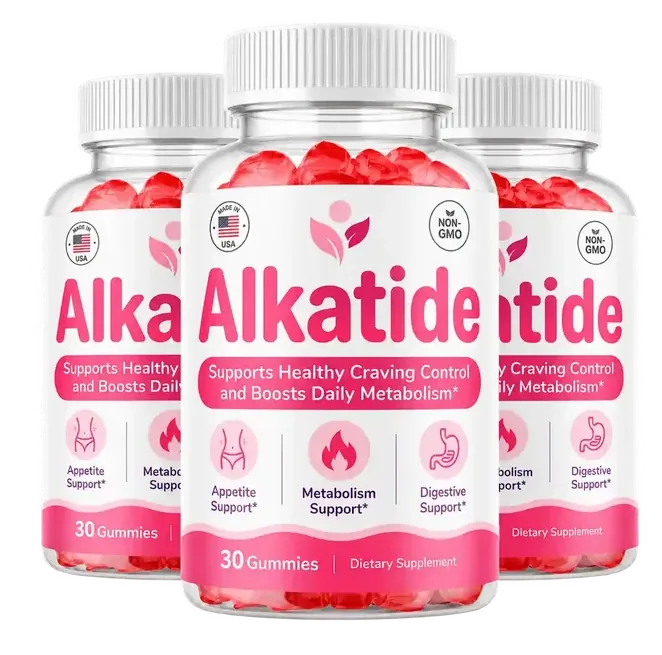
Try Alkatide: One Gummy, Sixty Days To Decide
No powder to mix, no capsule to swallow, and a page for every ingredient so nothing gets bought blind.
- Chewable, so there is nothing to swallow
- Chromium carries its own printed amount
- Free US delivery on the 3 and 6 bottle packs
- Sixty days to send it back, opened bottles included