Short Version
Thirst and hunger are regulated in overlapping parts of the brain and the signals are genuinely easy to confuse, particularly when both are mild. Drinking water before a meal has also been shown in small trials to reduce how much people eat. Both effects are real and both are modest — this is a useful habit, not a strategy.
Why The Signals Overlap
Both thirst and hunger are managed largely by the hypothalamus, and both arrive as a vague sense that something is needed rather than a labelled instruction. Neither comes with a caption.
Mild dehydration produces low energy, slight irritability and difficulty concentrating. So does mild hunger. If you have spent your life responding to that feeling by eating, that is the response you will reach for, and it will partly work — because food contains water. The habit gets rewarded either way, which is exactly why it persists.
The claim gets overstated when people say most hunger is really thirst. It is not. Real hunger is real, and this is about a specific, low-level ambiguity rather than a general rule.
What The Trials Show
Water before a meal reduces intake: modest support. Small trials, mostly in older adults, found that drinking around 500 ml of water half an hour before eating reduced the amount consumed at that meal. The effect appears smaller or absent in younger adults, probably because stomach emptying is faster.
Dehydration blunts appetite regulation: some support. Mild dehydration affects mood, alertness and concentration measurably, which is the mechanism by which the confusion plausibly happens.
Water causes weight loss: no. The intake studies measured one meal. Extending that into a weight-loss claim is a leap nobody has justified.
Note the shape of that: real, measured, modest, and oversold by everyone who repeats it. Which is the same shape as most things in this category, including several ingredients on the panel of this product.
The Ten-Minute Test
- Notice the feeling. Vague, mid-afternoon, not long after eating.
- Drink a full glass of water. Not a sip. Around 250 to 500 ml.
- Do something else for ten minutes. The waiting is doing as much work as the water is.
- Check again. Gone or much reduced means it was thirst, boredom or habit. Still there means it was hunger, and then you eat.
The point of this is not to talk yourself out of eating. It is to insert a decision where there used to be a reflex. Ten minutes and a glass of water, and about half the time you find out something useful.
How Much Water, Honestly
The eight-glasses rule has no particular evidence behind it and it has been repeated for so long that everyone assumes it does. Requirements vary enormously with body size, activity, climate and what you eat, and food supplies roughly a fifth of total intake.
A more useful check is urine colour: pale straw is fine, dark yellow suggests drinking more, and completely clear all day may simply be more than you need. That is not a precise instrument, and it is considerably better than counting glasses.
Thirst is not a reliable early warning in older adults. The thirst signal weakens with age, which is why dehydration is more common and more serious in older people. Anyone over about sixty-five is better off drinking on a schedule than waiting to feel thirsty.
Where This Sits Beside A Supplement
Ahead of it, and it costs nothing. If afternoon snacking is the problem you are trying to solve, a glass of water and a ten-minute pause is free, immediate, and addresses one genuine cause of the feeling.
A supplement whose main mechanism is slowing gastric emptying — which is what Apple Cider Vinegar does — works on a different part of the same problem. The two are not in competition. But if you have not tried the free one, trying the paid one first is an odd order of operations.
The hunger and appetite article covers the other half of this: telling a physical signal from a learned one.
Questions On This Article
What readers ask after reading it.
Do people really confuse thirst with hunger?
At low intensity, yes. Both are regulated in overlapping brain regions and both arrive as a vague sense that something is needed. The claim gets overstated when people say most hunger is thirst, which is not true.
Does drinking water before a meal help?
Small trials, mostly in older adults, found reduced intake at that meal after around 500 ml half an hour before. The effect appears weaker in younger people.
How much water do I actually need?
It varies far more than the eight-glasses rule suggests, and food supplies roughly a fifth of it. Pale straw urine is a more useful check than counting glasses.
Can drinking water make me lose weight?
No. The trials measured intake at a single meal. Turning that into a weight-loss claim is a leap nobody has supported.
Is this a substitute for taking a supplement?
It addresses a different part of the same problem, and it is free. Trying the free thing first is a reasonable order of operations.
Three More Articles
Ingredients Named Above
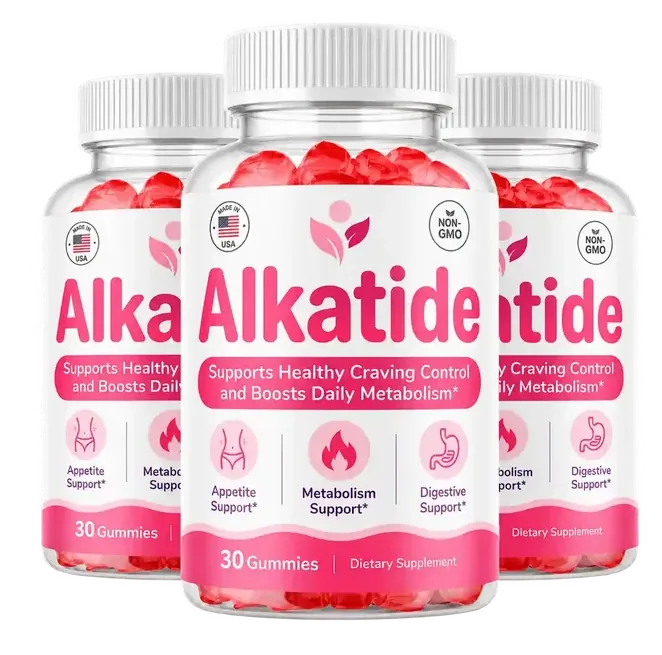
Try Alkatide: One Gummy, Sixty Days To Decide
No powder to mix, no capsule to swallow, and a page for every ingredient so nothing gets bought blind.
- Chewable, so there is nothing to swallow
- Chromium carries its own printed amount
- Free US delivery on the 3 and 6 bottle packs
- Sixty days to send it back, opened bottles included